
Rare Copper Dime: How Much Is It Really Worth?
Have you ever seen a dime that looks copper instead of silver? Collectors are often interested in rare copper dime value, hoping that a red-toned coin might be something unusual.
In most cases, it is not. Why? Because a regular copper dime for circulation does not exist. But in a few documented situations, a copper-colored dime can be the result of a real mint error. And when that happens, the value changes completely.
Let’s examine when a copper dime value can surprise you.
Dimes in History: What They Were Actually Made Of
Before discussing errors, it helps to understand the normal composition of dimes.
Silver Era (1796–1964)
For most of U.S. history, dimes were struck in 90% silver and 10% copper. The copper was mixed into the alloy, but it was not visible. These coins appear silver in color.
Clad Era (1965–Present)
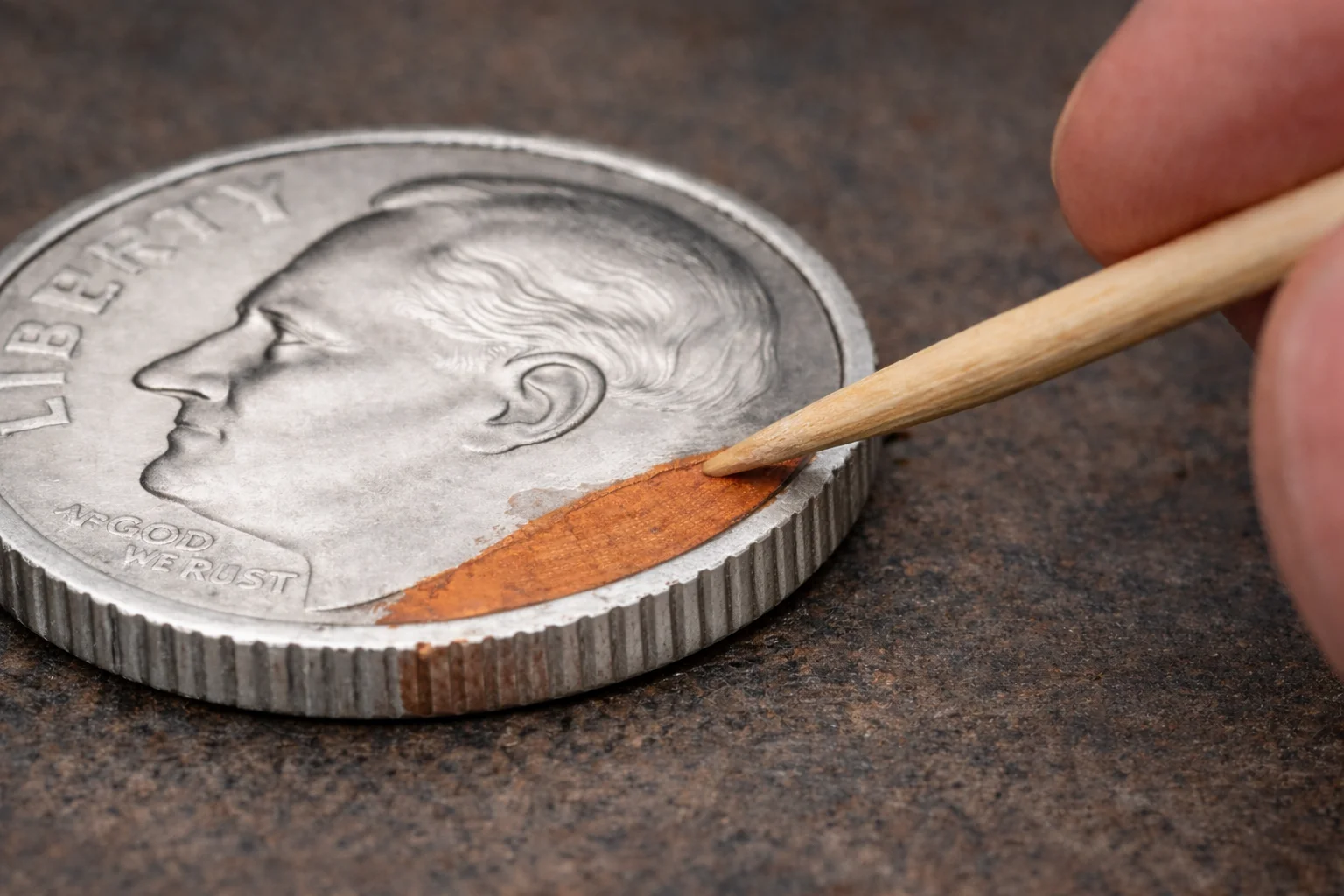
After 1964, dimes changed from silver to clad. The Mint used a copper core with nickel outer layers.
Structure:
Outer layers: copper-nickel
Core: copper
When intact, the coin looks silver. If the outer layer is missing or worn, copper shows.
There has never been a regular, solid copper dime in circulation. If one appears copper, something unusual happened.
How a Copper Dime Can Actually Exist
A genuine copper-colored dime usually falls into one of three categories:
Missing clad layer
Struck on the wrong planchet
Defective core or metal issue
Each scenario creates a different look and a different market reaction. Some of the examples you can see below:
1969-D 10C Missing Clad Layer
Average market level: around $60 (depending on condition)
This Denver issue sometimes appears with one outer clad layer missing. When that happens, the copper core is exposed.
The coin looks dull and reddish. It weighs slightly less than a normal dime. The surface lacks the typical nickel shine.
Collectors like this type because the difference is easy to see. The error is structural, not surface damage.
The key signs:
Copper tone on one side
Lighter weight
No evidence of grinding or filing
These pieces are not ultra-rare, but they remain collectible. Value depends on the grade and clarity of the missing layer.
1975-D Roosevelt Dime Struck on 2.6g Copper Planchet
This piece is a true off-metal strike.
The dime was struck on a copper planchet weighing about 2.6 grams instead of the normal 2.27 grams.
Key indicators:
Distinct copper color
Incorrect weight
Slightly different thickness
Normal dime diameter, but wrong metal composition
Unlike missing clad layer pieces, this is not surface exposure. The entire blank was incorrect before striking.
Such pieces are scarce. When authenticated, they often reach strong four-figure prices depending on condition and eye appeal.
The value depends on:
Certification confirmation
Strike quality
Surface preservation
Market demand at the time of sale
This type of error carries more weight among advanced collectors because it represents a full off-metal event, not a partial bonding failure.
1980-P 10C Struck on a Defective Copper Core
Typical price range: around $300, sometimes higher
In this case, the planchet itself was flawed before striking. The copper core had internal weaknesses.
The result:
Uneven color
Blotchy or darkened areas
Surface texture irregularities
Possible cracks or lamination splits
The coin still carries a clad layer, but the core defect affects the surface appearance.
These are more dramatic than a simple missing layer. Collectors pay attention when the flaw is strong and visible.
Condition matters heavily. A clean, well-preserved example brings stronger prices.
1999-D 10C Broadstruck on a Cent Planchet
Reported market result: over $6,000 in strong condition
This is a true off-metal strike. A Roosevelt dime was struck on a one-cent planchet. The planchet was copper, thinner, and slightly different in size.
The coin shows:
Reddish tone
Expanded diameter
Smooth, widened edge
Weak or stretched design
Because the collar was not functioning properly, the coin spread outward. The reeded edge may be missing.
This type of error is dramatic. It is not subtle. The wrong metal combined with a broadstrike makes it highly visible.
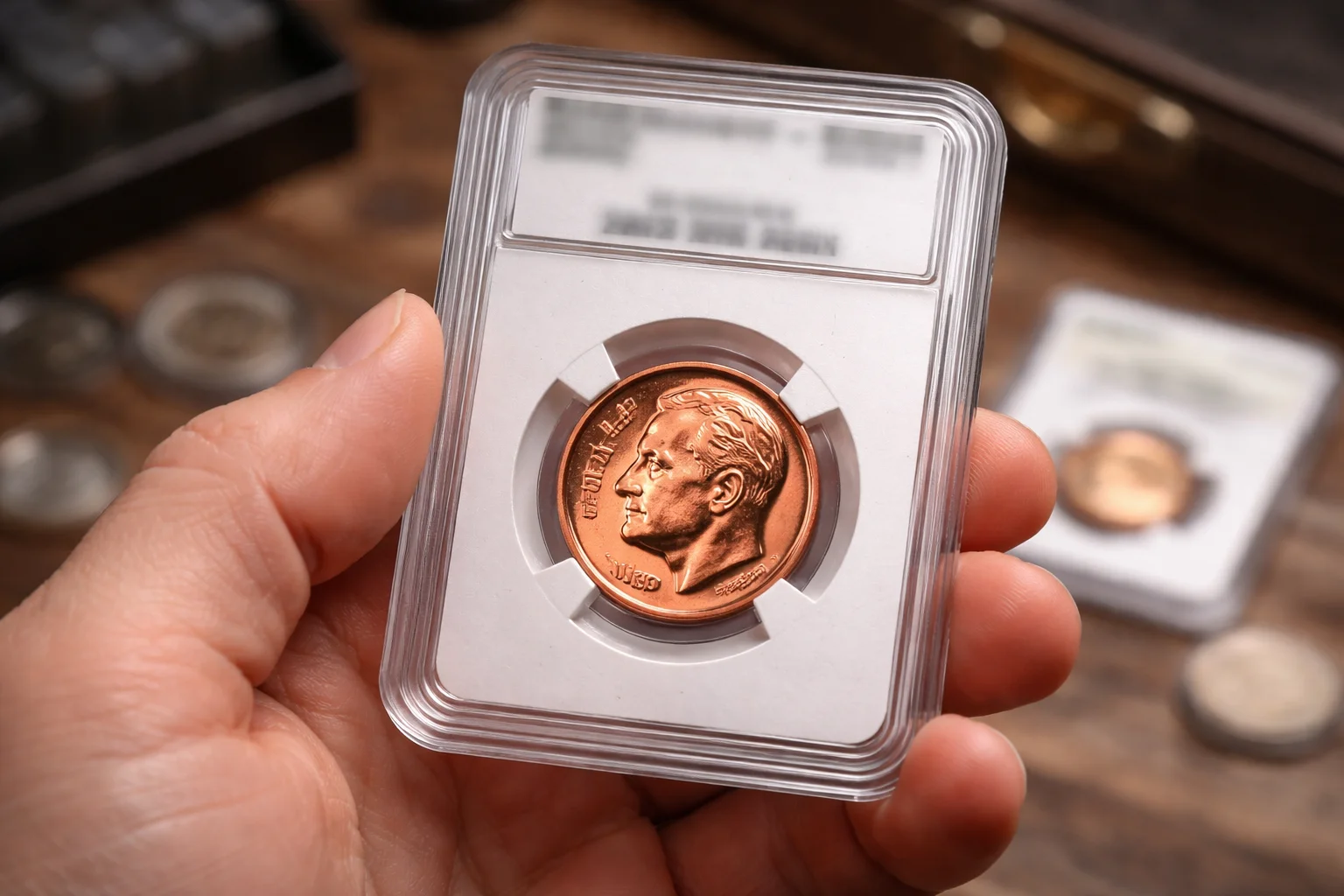
Authentication is essential. Certification confirms the off-metal status and protects value.
How to Tell a Valuable Copper Dime from a Common One
As you see, not every brown dime is rare. Color alone proves nothing. The difference lies in origin. Below is a practical comparison collectors use:
Feature | Potentially Valuable Error | Common, Non-Rare Cause |
Metal appearance | Full copper tone due to off-metal strike or missing clad layer | Brown edge stripe from normal clad wear |
Weight | Incorrect weight (often heavier or lighter than 2.27g) | Normal 2.27g weight |
Surface texture | Structural flaw from the mint process (peeling layer, core exposure, lamination) | Staining, corrosion, and environmental toning |
Strike characteristics | Proper design struck on the wrong metal or a defective planchet | Weak details from circulation wear |
Market verification | Confirmed by the grading service | No certification or documentation |
A genuine error has structural evidence. The metal itself is wrong or incomplete due to mint failure.
Common copper-colored dimes usually show:
Edge exposure from long circulation
Surface darkening from oxidation
Chemical discoloration
Post-mint damage
These do not create rarity.
Value forms when the mistake happened at the Mint, not after the coin entered circulation.
What Actually Drives Price
When a copper-toned dime is a verified mint error, several factors shape its market level:
Confirmed off-metal strike
Missing clad layer with intact surfaces
Defective copper core clearly originating from production
Strong visual contrast
Professional certification
Condition multiplies the result. A Mint State error brings far more than a circulated piece.
Auction setting also plays a role. Competitive bidding can push realized prices well above expectations.
The core principle is simple: origin determines value. Color alone does not.
Conclusion
There has never been a standard-issue solid copper dime released for circulation.
When a dime appears copper, it is usually worn. Sometimes it is damage. Rarely, it is a genuine mint error.
Those rare cases attract strong interest because they represent production anomalies. The difference between common and exceptional lies in structure, not color. So, to easily check minting details and historical background, use the reliable Coin ID Scanner app.
Understanding that nuances protects collectors from myths and helps identify genuine opportunities.
Should You Buy Copper Dime as an Investment?
Copper dime errors do not behave like bullion. They trade as error collectibles.
Their value is tied to:
Story
Mechanical origin
Documentation
Because each piece is unique, there is no fixed pricing chart. Collectors who understand minting mechanics tend to perform better in this niche.